Sigiriya Mirror Wall and Sigiriya Graffiti
Sigiriya Mirror Wall and Sigiriya Graffiti
The Mirror Wall at Sigiriya is another fascinating feature of the ancient rock fortress. It is located below the famous frescoes on the western side of the rock and serves both as a historical artifact and as a testament to the artistic and architectural achievements of ancient Sri Lanka. The wall earned its name because, in its prime, it was so highly polished that it was said to reflect the king’s image as he walked past.
The Sigiriya Frescoes represent masterpieces of ancient Sri Lankan art and rank among the most significant places to visit in Dambulla and Sigiriya for art enthusiasts. Located in a sheltered gallery halfway up the Lion Rock, these 5th-century paintings depict celestial maidens known as “Sigiriya Apsaras” in vibrant colors that have remarkably survived over 1,500 years.

Originally, over 500 frescoes adorned the rock face, though only 22 paintings remain today. The adjacent Mirror Wall, once polished to a mirror-like finish, contains over 1,500 pieces of ancient graffiti written by visitors between the 7th and 11th centuries, making it one of the world’s oldest examples of tourist commentary.
History and Purpose:
Construction and Appearance: The Mirror Wall was constructed during the reign of King Kashyapa I in the 5th century CE. It was originally plastered and polished with a mixture of lime, egg whites, and honey to create a highly reflective surface. The smooth, shiny wall was meant to be both aesthetically pleasing and functional, allowing the king and his entourage to see their reflections as they passed by.
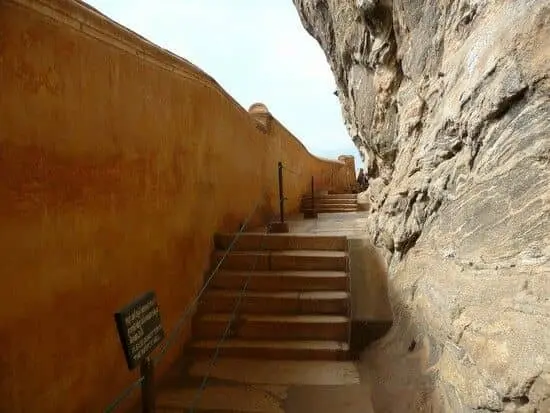
Location: The Mirror Wall runs along the staircase that leads to the summit of Sigiriya, where the king’s palace once stood. It is located below the fresco gallery, where the famous Sigiriya Maidens are painted on the rock. Visitors ascending to the palace would pass this wall on their way to the top, making it a central feature of the Sigiriya experience in ancient times.
Function: The primary function of the Mirror Wall was decorative, adding to the grandeur and splendor of the Sigiriya rock fortress. However, it also had a symbolic role. The polished surface may have symbolized the refinement and sophistication of King Kashyapa’s court and his desire to create a paradise on earth. It also reinforced the notion of the king’s god-like presence, as he could see his reflection while walking through his majestic creation.
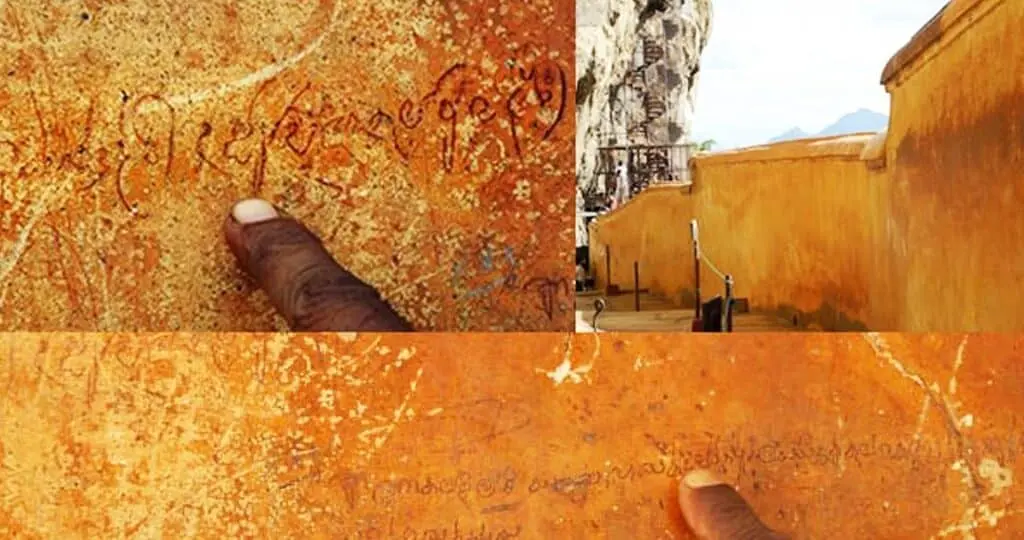
Over time, the Mirror Wall became more than just a reflective surface. It turned into a canvas for ancient graffiti, where visitors inscribed their thoughts, poems, and comments about their experience at Sigiriya and their admiration for the frescoes and the site.